
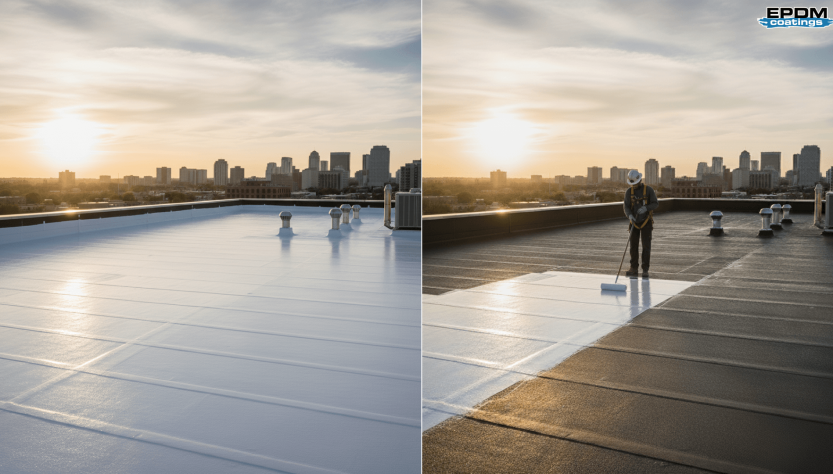
A leaking EPDM roof does not always mean the whole roof has reached the end of its life. Often, the membrane is still in decent condition, and the real problem is much smaller: a seam has started to open, an older repair has loosened, or water is getting in around a penetration.
That is good news, because tearing off an entire EPDM roof to fix a few weak areas can be unnecessary.
If the roof is still structurally sound, a better approach may be to repair the damaged seams first, then protect the surface with a compatible roof coating.
EPDM Coatings offers two products for this kind of work: Steamtight Rubber Seam Compound for localised repairs and Liquid Butyl Rubber to create a seamless membrane over the prepared roof. The trick is using them in the right order.
First, Find Out Where the Water Is Getting In
The wet spot you see inside the building is not always directly below the actual leak. Water can move underneath roofing material before it finally finds a way inside, which is why it makes sense to inspect the roof rather than immediately coating over the first suspicious area.
Start with the obvious places. Look at the seams. Check around vents and other roof penetrations. Inspect edges, joints, and places where previous repairs have been made.
You may find a seam that has pulled apart slightly or an older patch that is no longer completely bonded.
If the opening is larger than 1/16 inch, EPDM Coatings recommends repairing or reinforcing that area before applying Liquid Butyl Rubber. That is an important step.
A roof sealant works best when applied over a properly prepared surface, not when it’s asked to fill a major gap on its own.
What Should You Use on a Leaking EPDM Seam?
For damaged seams, EPDM Coatings recommends Seam Tight Rubber Seam Compound. Seam Tight is designed for problem areas such as seams, fasteners, and roof penetrations.
It creates a flexible membrane and can be brushed or rolled onto the prepared surface. If the seam is badly damaged or torn, EPDM Coatings recommends a more complete repair.
The process involves applying Seam Tight over an area about eight inches wide, placing poly fabric into the wet material, and letting the repair dry.
You can then apply Liquid Butyl Rubber over the repaired section. It may sound like one extra step, but it serves a purpose. You are repairing the weak point before covering the roof. That is very different from simply rolling coating over a split seam and hoping it holds.
Why Coat the Roof After Repairing the Seam?
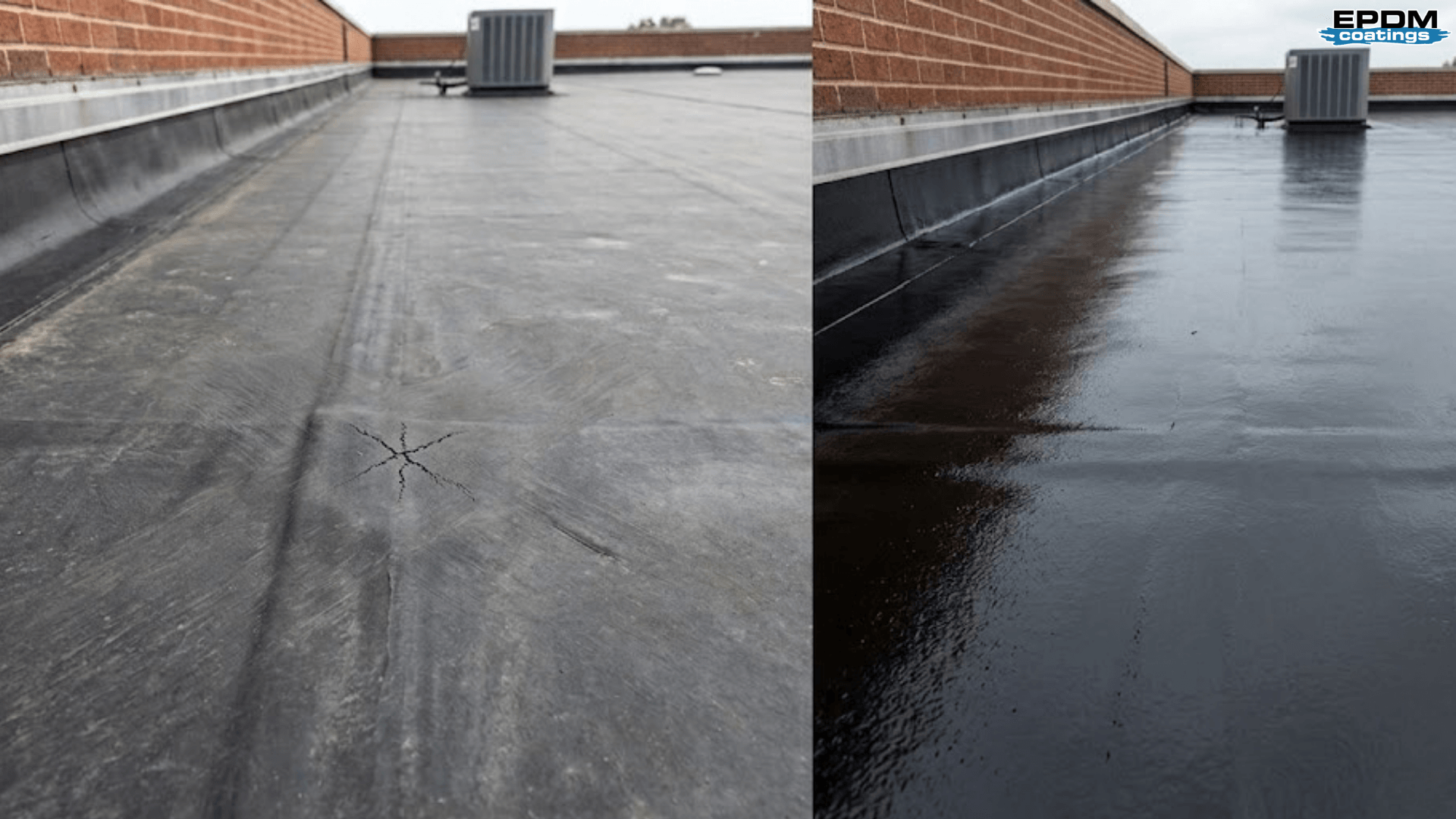
Once you’ve addressed the seam damage, you can tackle the bigger issue: protecting the existing roof. Liquid Butyl Rubber creates a continuous membrane over a properly prepared surface.
That matters because seams are naturally some of the most vulnerable points on an EPDM roof.
When you apply a seamless roof coating across the surface, the repaired seams become part of the larger coated membrane rather than remaining exposed repair points.
Liquid Butyl Rubber is solvent-based and chemically cross-links as it cures. As it cures, it bonds to the existing roof and self-levels.
The finished result is a flexible membrane without the same exposed seam pattern you started with.
For an older EPDM roof that still has a solid base, that can be a much more sensible solution than replacing everything.
One Coat Is Usually Enough
One advantage of Liquid Butyl Rubber is that it is designed as a one-coat application. On approved surfaces, a separate primer and topcoat are not normally required. The recommended finished thickness is approximately 20 mils.
Coverage on a smooth surface is about 50 square feet per gallon, which means a five-gallon pail will cover roughly 250 square feet when applied at the recommended rate. Those numbers are worth noting. Using too little material can leave the coating thinner than intended.
Using too much in one section can mean you don’t have enough product to finish the rest of the roof. A simple way to avoid that is to mark the roof into sections before you begin. For example, a 10-foot by 5-foot area equals 50 square feet.
If one gallon covers that section, you have a much better idea that the material is being applied at the intended rate.
Cleaning the Roof Is Not Optional
This is the least exciting part of the job. It may also be one of the most important.
An EPDM roof in service for years will collect dirt, oils, mildew, and other contaminants. Residue may also build up around old repairs. None of that should be trapped underneath a new coating.
Before beginning the roof repair, thoroughly clean the roof. EPDM Coatings recommends removing debris, grease, dirt, oil, mildew, and other materials that could interfere with adhesion.
Roof Protect is recommended as part of the preparation process. After cleaning, let the roof dry completely. Not mostly dry. Completely dry.
Do not apply Liquid Butyl Rubber to a damp roof. Moisture underneath the coating can cause problems, so rushing this part of the job doesn’t save much time in the long run.
Applying Liquid Butyl Rubber
After you repair the seams and clean and dry the roof, you can move on to the coating. Liquid Butyl Rubber includes a catalyst that you must mix thoroughly into the coating.
EPDM Coatings recommends using an electric drill with a paddle mixer. Take the time to mix it properly. Once mixed, you can apply the product with a 3/8-inch nap roller.
A brush is useful for tighter areas, corners, and places where a roller cannot reach comfortably. Working in measured sections usually makes the job easier.
It gives you more control over how much product you use and keeps you from realizing too late that one side of the roof got far more coating than the other.
Pay Attention to the Weather
Don’t start this project with rain approaching.
Liquid Butyl Rubber forms a skin within roughly two to three hours and becomes waterproof in about three hours at 50°F or higher. Actual curing time depends on the conditions.
If the temperature drops below 50°F, curing pauses and starts again once temperatures rise. EPDM Coatings also recommends waiting about 48 hours before walking on the newly coated roof.
So before opening the pail, check the weather and give yourself a reasonable working window. A few extra hours of planning are better than rushing a roof coating because a storm is moving in.
What If Water Sits on the Roof?
Ponding water is common on some flat or low-slope roofs. That can make people hesitant about coating an existing EPDM roof.
Liquid Butyl Rubber, however, is designed to withstand ponding water and continually submerged conditions once properly applied and cured.
The coating is also rated at 500% elongation. That flexibility is useful because a roof does not stay completely motionless. It expands and contracts as temperatures change.
A coating that stays flexible is better suited to moving with the roof than becoming another rigid repair area.
Repair or Replace?
Some roofs need to be replaced. No coating can correct structural failure or rebuild a roof that is no longer sound. But that is different from finding a few leaking seams.
If the main EPDM membrane is still in good condition and the problems are concentrated around seams, penetrations, or a handful of damaged areas, replacement may not be the first option you need to consider.
EPDM Coatings states that Liquid Butyl Rubber can add about 18 to 20 years of additional service life when properly applied to a suitable existing roof.
That makes inspection important. Instead of asking, “My roof leaks, so do I need a new roof?” ask a more useful question:
What part of the roof is actually failing?
Suppose the answer is a seam or another localized area; repair that first. Then decide whether coating the rest of the roof makes sense.
Fix the Problem Instead of Covering It Up
There is a big difference between repairing a leak and hiding one. If an EPDM seam is open, repair the seam. If you need reinforcement, use it. Clean the roof properly. Let it dry. Then apply the coating to a surface ready to accept it.
For leaking EPDM seams, Seam Tight can repair damaged areas, while Liquid Butyl Rubber provides a seamless protective membrane over the prepared roof.
That approach allows you to keep a roof that still has useful life left instead of automatically moving toward a full replacement. Sometimes the best roof project is not a new roof.
It is simply fixing the part that failed and protecting the rest before another problem starts.